Training Tip: Handle a Problem From the Ground
When I apprenticed with Ian Francis, he told me: “There are a lot of heroes in the graveyard.” Too many people try to play the hero by riding an unprepared or difficult horse and end up getting bucked off. They break their necks and die because they didn’t use their heads.
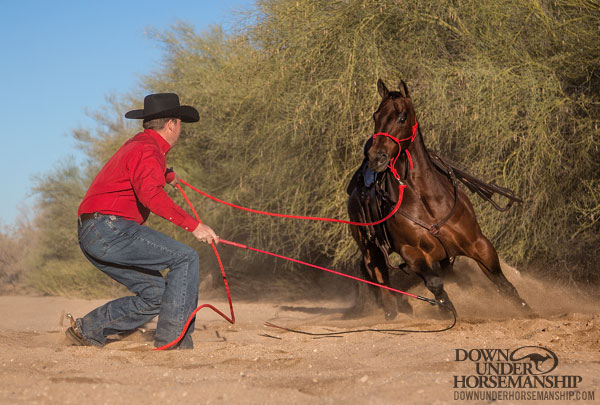
If you’re having a problem with your horse, there’s no shame in getting off the horse and working through the issue on the ground, especially if it puts you in a safer position. You can move the horse’s feet forwards, backwards, left and right on the ground just as well as you can from his back.
A lot of people are under the impression that you should never get off a horse when you run into trouble because the horse will get away with his bad behavior and think that he won. The horse only “wins” if you get off and put him away, not if you get off and hustle his feet. Personally, I would much rather solve a problem on the ground than be in the saddle wishing I was on the ground. Once you have the horse’s feet moving, he’s using the thinking side of his brain and is no longer frightened, you can get back in the saddle. You only have one body, and you need to take care of it.
