Training Tip: Calling Out to Other Horses
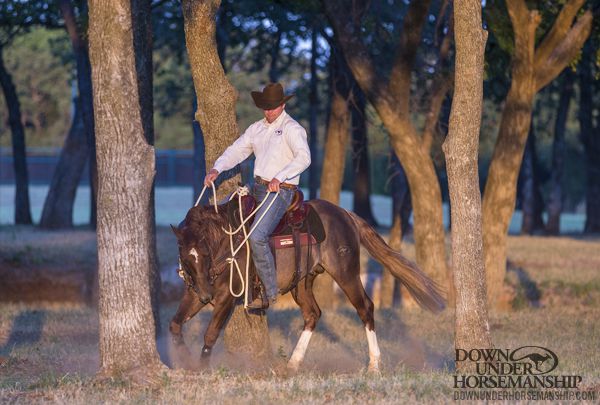
Oftentimes, busy-minded horses are guilty of sending shrill whinnies up and down the trail, hoping to hear a response from another horse. From nervous whinnies to deep neighs, horses’ voices carry very well, which can attract a lot of unwanted attention.
When your horse whinnies, he’s telling you in big bold letters that his attention is not on you. A horse that is focused on his rider and the job at hand does not have time to be calling out. It’s a clear sign that you’re not engaging him enough and getting him to use the thinking side of his brain.
When you’re on a horse that’s anxious and unsure, get his feet moving. Train on him. Practice Bending Transitions. Two-track him. Sidepass up and down the trail. Use your imagination to get him to focus on you and not his unease.
When you first take a horse away from home, it’s common for him to be nervous and call out to other horses. For the most part, when this happens to me, I ignore it. I just focus on training the horse, because I know once I get him moving his feet forwards, backwards, left and right, he won’t have time to be worried about his buddies. In that way, the problem disappears on its own.
