Misconceptions in Selecting Forage for Horses — Rained On Forage
By Dr. Stephen Duren, Performance Horse Nutrition and Standlee Premium Western Forage® Nutritional Consultants
Forage in the form of hay or pasture is the primary ingredient in the diet for most horses. Horses can consume many different varieties of high-quality forage, both alfalfa and grasses, without digestive upset, provided the horse is properly adapted to the forage.
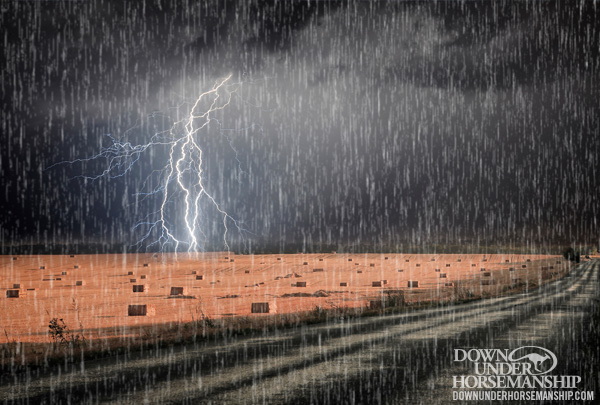
Plants that are being grown and harvested for stored forage for horses may get rained on once the plant is cut.
Misconception: Forage that has been rained on is not suitable for horses.
Fact: Forage that has been rained on after cutting will need to stay in the field longer to adequately dry prior to baling. As long as the forage is at the proper moisture content prior to baling, the forage can be fed to horses. The longer forage must lay in a field to dry, the more potential for nutrient loss, so multiple rain showers can be a problem.
Solution: Horse owners do not need to shy away from rained on forage as long as the hay was properly dried prior to baling and as long as the rain shower did not significantly extend the time the forage had to lie in the field.
