Training Tip: Can You Teach an Older Horse to Neck Rein?
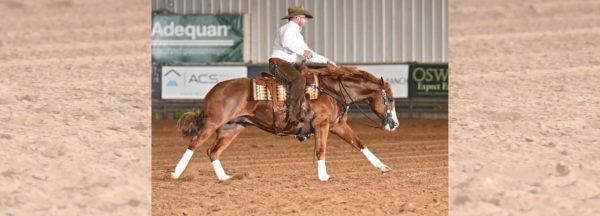
Question: I have a 13-year-old gelding that I am wondering about teaching to neck rein. He has been direct reined all his life. Do you think it is too late to teach him? If not, what are your techniques? Also, do I need a special bit? – Rocket
Clinton’s Answer: It’s not too late to teach your horse to neck rein. I teach all of my horses to neck rein using a snaffle bit because it’s easier for them to understand what I’m asking them to do since they’re used to being ridden in a snaffle bit. If you plan on showing your horse and riding him one-handed, you’ll eventually have to move to a shank bit.
To teach a horse to neck rein, I start by collecting the horse and asking him to trot. I keep both hands on the reins. When the horse is soft in my hands, I ask him to turn. To turn left, I look in the direction I want the horse to go in and then I lay the indirect rein (in this case the right rein) against the middle of the horse’s neck. This is just a cue for him to turn, and initially, he’s probably not going to understand what you’re asking him to do.
If he doesn’t turn, pull the rein across his neck toward your left hip. At the exact same time, pull the direct rein (in this case the left rein) up to your left hip so that the horse tips his nose in the direction he’s turning.
When you pull the reins up to your hip, apply pressure with your outside leg up near the girth at the same time. Your outside leg will reinforce to the horse that he needs to bring his shoulders through the turn.
Through repetition, as soon as you lay the indirect rein against the horse’s neck, you won’t have to touch the direct rein to make him look and turn in the direction you want him to go in—he’ll automatically start to do it on his own.
As soon as the horse turns 90 degrees and is soft in the bridle, put your hands forward and let him trot straight on a loose rein. Putting the horse on a loose rein gives him a chance to relax and think about what you’re asking him to do. If you’re constantly pulling on him, he’ll get frustrated. I continue to work on turning the horse in one direction until he understands the concept of the exercise. When he does, then I work on turning him in the opposite direction. When he’s good at turning in both directions at the trot, then I follow the same steps to teach him the exercise at the canter.
When the horse is guiding well at the trot and canter, then I progress to using just one hand on the reins. I still follow the same concept— bringing both reins back to my hip— but I do it using only one hand. I explain how to teach a horse to neck rein in the Advanced Series. Along with detailed teaching steps, the lesson includes common rider mistakes, horse problems, troubleshooting advice and success tips.
Have a horsemanship question or looking for more training tips? Check out the No Worries Club.
