Training Tip: Introduce Scary Objects to Your Horse
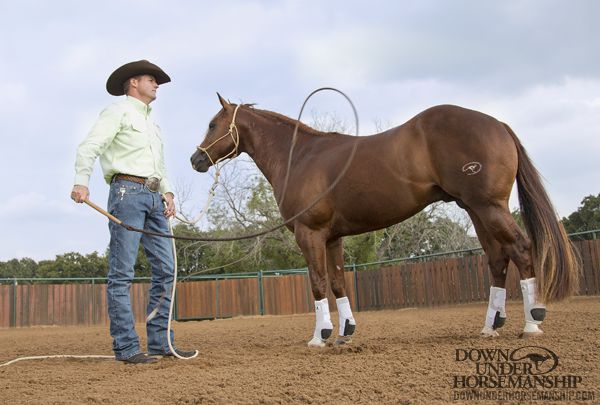
Trying to protect a horse from objects he’s scared of only makes the situation worse. I’m sure you’ve experienced this yourself. Your horse is afraid of fly spray, so you slowly tiptoe up to him with the bottle safely hidden behind your back. When you reach him, you tentatively reach out to pat him on the neck and then BAM! You whip out the fly spray and start wildly spraying the horse. By this point, your horse is scrambling to get away from you. As a suspicious prey animal, he assumes that if you’re being cautious, you must have a reason to be.
I like to tell people that “heart attacks are free, so give your horse one.” Or, in other words, do not tiptoe around your horse and be afraid to scare him. That only makes the situation worse. Your goal should be to desensitize your horse to as many objects that move and make a noise as possible. The more objects you introduce to your horse and he gains confidence with, the safer he’ll be in general. You can’t accomplish that if you’re afraid to scare him, though.
I use the Approach and Retreat Method to introduce objects to my horses. I approach them with the object they’re scared of and then retreat when they stand still and show a sign of relaxing. If a horse gets scared and moves his feet, I follow him with the object. As long as I stay in a safe position, he can have all the heart attacks he wants.
The key to building a horse’s confidence in an object is to only take it away from him when he’s standing still and showing a sign of relaxing. When a horse relaxes, he’ll do one of five things: he’ll lick his lips, blink his eyes, lower his head and neck, cock a hind leg or take a deep breath. That’s the opposite of a horse tuning in to his prey animal instincts of running away and overreacting. You have to constantly reinforce to your horse that the answer is not to run from danger, but to stand still and relax.
Every time you desensitize your horse, try to do it with more intensity and with scarier objects. If you end up scaring him, that’s OK because it gives you the opportunity to build his confidence. If you can’t scare him, that’s good too because it lets you know that you’re doing a good job training him. The more you try to scare a horse using the Approach and Retreat Method, the quieter he’ll actually become.
