Training Tip: Why Speed Isn’t a Good Idea When Riding Hills
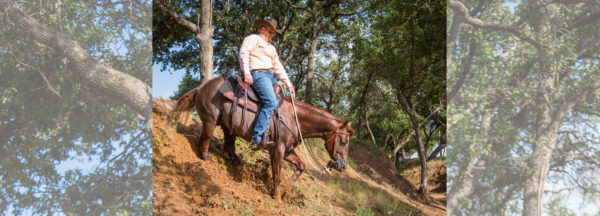
How a horse handles hills is as much a reflection of your own skills and know-how as it is of your horse’s. A well-trained trail horse creeps up and down hills, moving like molasses as he carefully picks his way over the terrain. Regardless of why a horse isn’t negotiating a hill in that manner, the bottom line is it’s dangerous to be on a horse that rushes up or down steep inclines.
Most horses tend to have more trouble walking slowly downhill. When a horse goes downhill – because gravity is pulling him down so strongly – it takes more effort for him to walk down slowly. So instead of putting in any effort, a lot of horses end up scrambling with their hind legs, picking up speed as they go along. You never want a horse to run downhill – unless you tell him to and it’s your idea. However, unless you really know the terrain, and know that your horse can balance himself, it’s just not safe. Running up or down hills can cause a misstep that results in a bad fall. If the hill is in a wooded area, a downed tree or a low-hanging branch could pose a serious safety hazard. For your sake and the sake of your horse, teach him to negotiate hills calmly rather than putting up with disrespectful and potentially dangerous behavior.
